
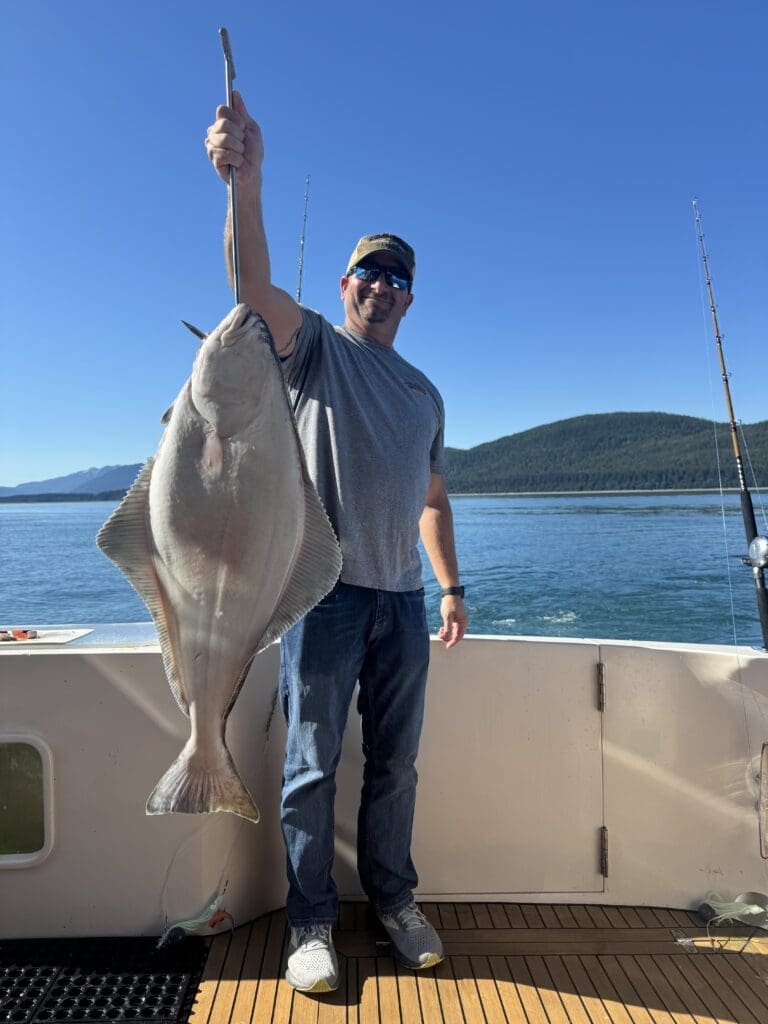
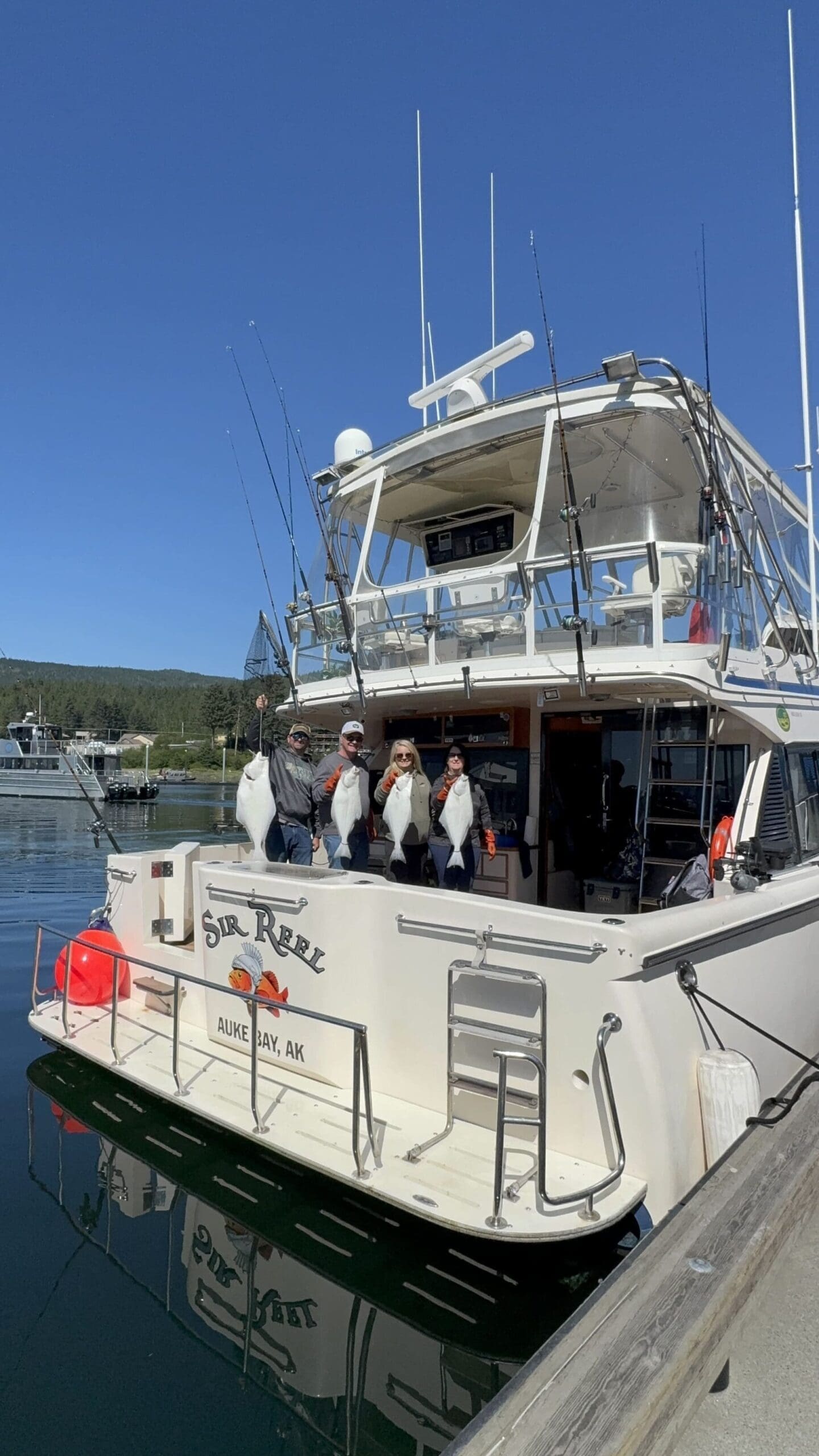
Halibut fishing Juneau Alaska is a singular experience. There is a special kind of silence that settles over the rail when a halibut takes the bait. The rod is bent, the reel screams in your hand. Everyone on deck excitedly stares down into the black water, waiting to see color, the telltale sign the fish is close to the surface. As soon as the fish sees the surface, it dives again, and reminds you that halibut aren’t just delicious — they are stubborn, heavy, and perfectly built to make anglers earn every inch.
That is exactly why halibut fishing in Juneau Alaska stays with people. You are not drifting through a generic sightseeing day. Instead, you’re fully immersed in one of the world’s most dramatic coastal landscapes, fighting for your chance to land dinner. On our trips, that can mean running out of Auke Bay under low gray clouds, watching sea lions on the buoys, and dropping baits into cold green water with snow still blanketing Juneau’s 7,000-foot peaks.
In this guide, we break down when we fish for halibut around Juneau, where we like to run, what current regulations you need to check, how big these fish actually get, and what it feels like when one decides it is not coming up without a fight!
Your Complete Guide
- Why Halibut Fishing in Juneau Hooks People So Fast
- What the Deck Smells Like When It Is Working
- When We Target Halibut Around Juneau
- The Biology Behind the Pattern
- Where We Fish for Halibut Out of Juneau
- Why Local Judgment Changes Everything
- What It Feels Like to Haul a Halibut Off the Bottom
- How We Coach the Fight
- Regulations, Slot Limits, and What to Check Before You Fish
- How Big Halibut Get in Alaska, and What That Means on the Rod
- Shape, Depth, and Leverage
- What to Bring and Expect on a Juneau Halibut Charter
- FAQ
Why Halibut Fishing in Juneau Hooks People So Fast
A good Juneau halibut day is part patience and part workout. While you watch whales, we’ll set up our drift, get baits down, and then watch for the first rod tip to twitch. Then the whole mood changes in a second. Someone (usually Captain Dave) yells, “Fish on! Reel, reel, reel!” And the focus becomes bringing the fish to the surface and onto the boat.
The excitement is a big reason halibut fishing in Juneau appeals to so many guests, even people who have never fished saltwater before! The challenge is simple: put the bait in front of the halibut, feel the bite, then keep the line tight! You don’t need years of practice — you need curiosity, enthusiasm, and a touch of patience.
What the Deck Smells Like When It Is Working
We also love how honest halibut fishing feels. The deck is wet. The bait is oily. The gloves smell like salmon, squid, and herring. The hum of the engines dropping in and out, gulls picking at scraps behind the stern, and somebody laughing because they thought the fish was close ten minutes ago. When people picture Alaska, they often imagine glaciers first. But by the time a real halibut makes it onto the deck, they remember the weight in their arms instead.
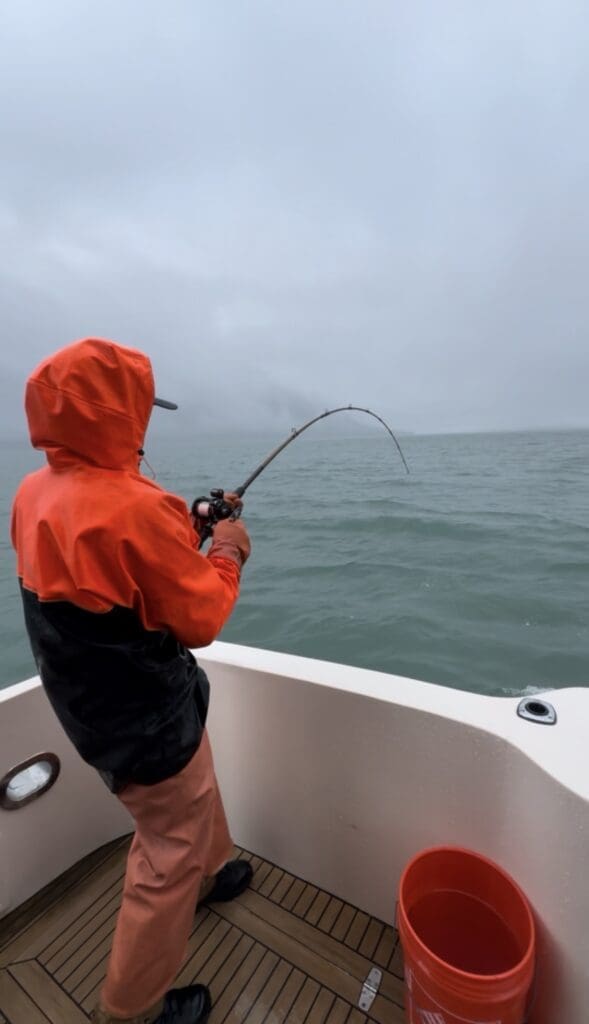
When We Target Halibut Around Juneau
We think about halibut season in practical charter terms, not in brochure language. What matters most to guests is whether the fish are biting in areas we can fish efficiently, and whether the weather and tide let us get there and work in our favor.
From late spring into summer, the fishing around Juneau generally gets friendlier for dedicated halibut trips. We have longer daylight hours, more stable weather windows, and enough room in the day to run, fish hard, and still stay flexible if conditions change. But that doesn’t mean every day is flat calm. Southeast Alaska still does what it wants! However, May through early August is the stretch when a lot of anglers picture themselves fishing for halibut out of Juneau, and for good reason.
The Biology Behind the Pattern
There is also a biological piece behind that pattern. According to the International Pacific Halibut Commission, adult Pacific halibut typically move to shallower feeding grounds in summer and migrate to deeper water in winter for spawning. In other words, summer fishing and halibut biology naturally line up in ways that make charter trips much more productive.
If you are trying to time a trip, our advice is simple:
- Think in terms of charter conditions, not just a calendar month
- Ask what the current weather, tide, and recent fishing patterns are doing
- Leave room for the reality that some days look a little gray, a little sloppy, and are still very fishy
Where We Fish for Halibut Out of Juneau
This is the part that makes a Juneau trip feel local. Fishing along a coastline shaped by tide, wind, and glaciers. Houses full of character dot the shoreline as whales breathe and breach nearby. Juneau is a place where you can dip your toes into the wild without leaving behind the comforts of a city.
Our days start in Auke Bay. We’ll meet you outside the harbor office and walk you down to the boat. After our safety spiel, we’ll push off and head out to the halibut grounds. With the harbor behind us, you’ll be treated to fresh scones with spruce tip jelly and drinks like lattes, tea, and Alaska beverages.
Depending on the day, Dave will target deep structure or proven drifts to give a mix of halibut opportunity and enjoyable fishing. Juneau halibut fishing isn’t about running far — it is about thinking like a halibut!
Why Local Judgment Changes Everything
Local judgment matters because Southeast Alaska water is never one-note. One stretch of water can be slick and sheltered. Another can have a sharp chop rolling across the tide line with wind pushing against the current. And in the same morning, you can smell diesel and bait in the harbor, then find yourself staring at dark timber on the islands, fresh snow on the upper mountains, and humpbacks sounding off a distant point.
That is why halibut fishing charters in Juneau Alaska feel like part fishing trip and part coastal immersion — for us, the scenery isn’t separate from our fishing decisions.
When we walk guests through where we might fish, we generally frame it this way:
- We look for bottom and current that make sense for halibut
- We weigh the weather window and the group’s comfort level
- We choose an area that gives us the best mix of fishable conditions and quality time with baits in the water
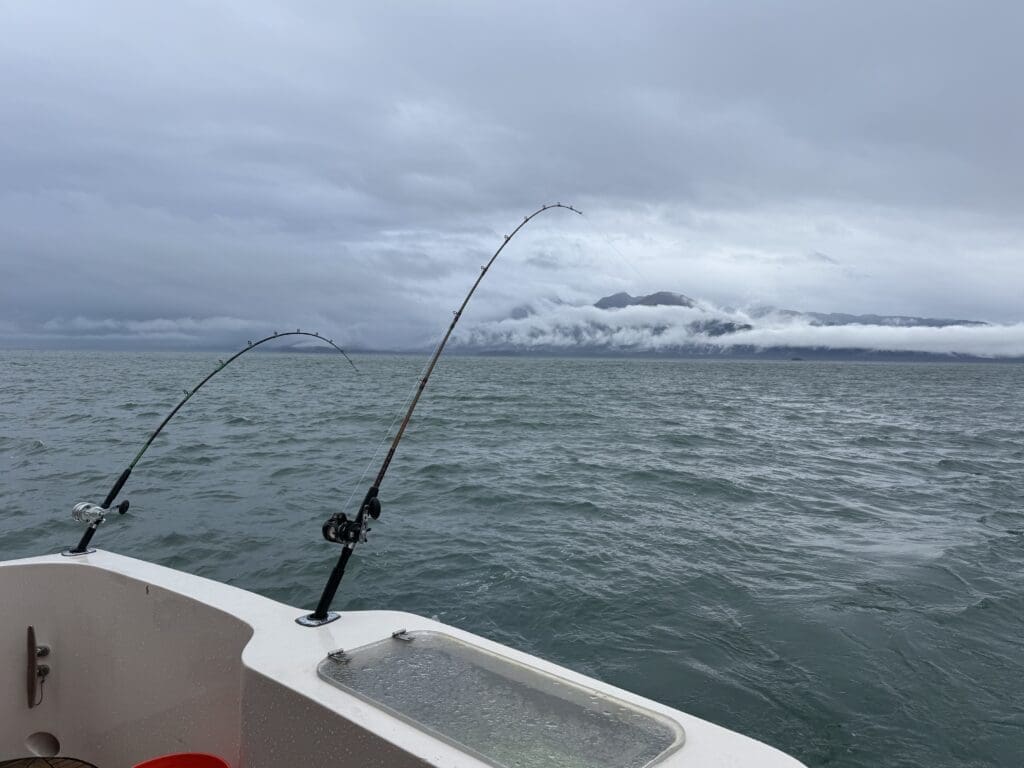
What It Feels Like to Haul a Halibut Off the Bottom
If you have never fought one before, a halibut does not feel like a salmon, and it does not fight the way most people expect. The first surprise is the weight — not just the fish itself, but the combination of fish, depth, current, and rig weight coming straight up from the bottom. Sometimes it can feel like you’ve hooked a wet sheet of plywood with a mind of its own.
Then comes the second surprise. Halibut rarely give up easily. You’ll gain line for a while and start to think you are winning. Then the fish dives again. Or it spins and gets tail-wrapped. Or an orca or lingcod goes for an easy meal, and suddenly every crank feels heavier than the last ten. By the time color finally shows under the boat, your forearms are pumped, and you’ve broken a sweat.
How We Coach the Fight
That is why we coach so much during the fight. Slow down. Keep pressure. Do not pump wildly. Breathe. Use your legs. Let the rod and reel do their job. When guests settle in and listen, even a very heavy fish becomes manageable. When they rush, things get sloppy, and fish spit the hook and run free.
It is also one of the most satisfying fights in Alaska because the payoff is so visual. You see that white flash under the surface. The broad shape rolls. Everyone on deck leans over for a better look. Then you realize the fish is the right size and a keeper! A flavorful memory waiting to happen.
Regulations, Slot Limits, and What to Check Before You Fish
Halibut rules can change. Charter-retention rules can change. Size-based restrictions and slot-style rules can change. And they can change every year!
That’s why we always encourage guests to check the official Southeast Alaska sport fishing regulations, the latest Emergency Orders, and the local Juneau Management Area fishing information before they go fishing.
Alaska Department of Fish and Game guidance makes it clear that in-season updates can override printed regulations. That matters specifically for halibut because anglers often hear last year’s limit at the dock and assume it still applies. We don’t fish that way — we verify the current rules first, every season.
The same goes for licenses. Nonresidents age 16 or older need a valid Alaska sport fishing license, and the ADF&G licensing page is the official source for current fees and purchase options.
Our practical advice is straightforward:
- Treat any outdated forum post or social media comment as incorrect until it matches ADF&G’s current regulations
- Ask your charter guide what they are seeing in the current ruleset before you book
- Keep your focus on what is current today, not what was true on somebody’s trip two summers ago (no matter how badly you might want to retain a larger fish or more fish)
This approach might seem less helpful than quoting a hard number in a blog post, but it is the honest way to talk about halibut fishing charters in Juneau Alaska, when regulations shift annually.
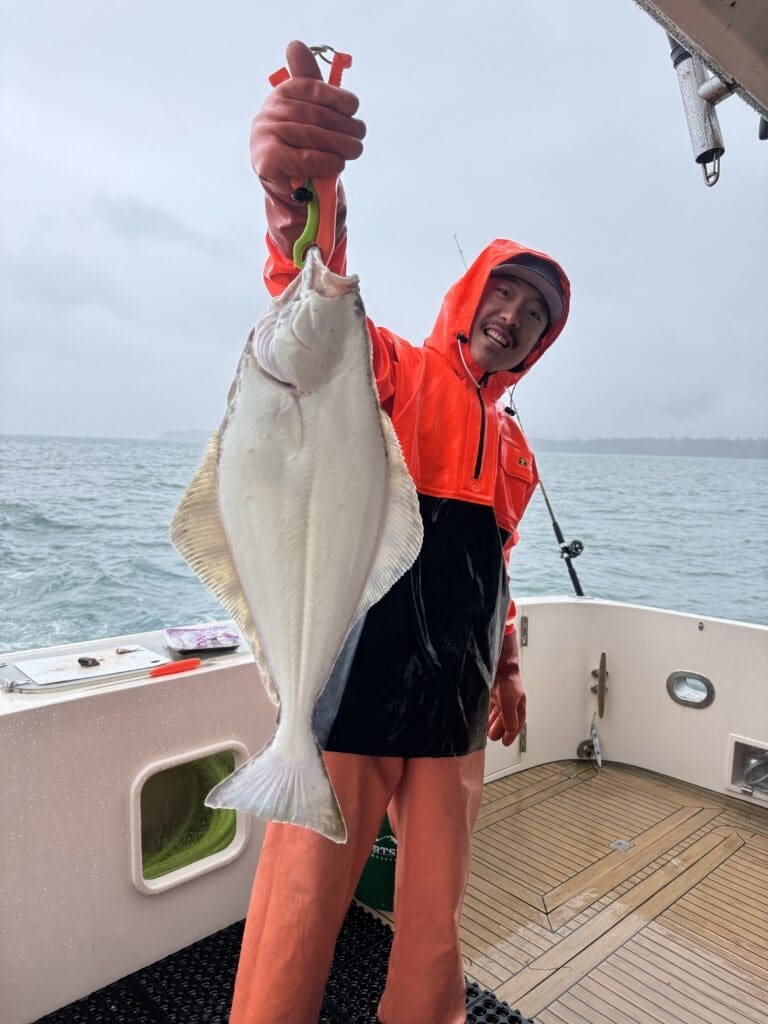
How Big Halibut Get in Alaska, and What That Means on the Rod
The short answer: bigger than most first-time guests expect. According to ADF&G and NOAA Fisheries, Pacific halibut are the largest flatfish species. ADF&G records show they can occasionally exceed 400 pounds, with Alaska’s sport-fishing record standing at 459 pounds, caught in 1996. Most anglers are not fighting a fish of that size on a normal charter day, but knowing the ceiling helps explain why even a much smaller halibut can feel outrageously strong.
Shape, Depth, and Leverage
Their shape matters too. Halibut are built to live tight to the bottom, and the International Pacific Halibut Commission notes they are most often caught between 90 and 900 feet of water. That broad, flat body is exceptionally good at using depth and resistance against you. As a result, a fish does not need to be enormous to make you work like it is.
For guests, the practical takeaway is straightforward:
- A “good eater” halibut (less than 30 inches) can still give you a memorable fight
- A fish that looks manageable on deck can feel far bigger on the way up
- The phrase “barn door” exists for a reason!
This is also where expectations matter. We would rather tell you the truth than sell a fantasy: most trips don’t produce giants. Nevertheless, every serious halibut trip carries the possibility of a fish that makes the whole boat go quiet for a second.
What to Bring and Expect on a Juneau Halibut Charter
While many of our guests tend to focus on rods, reels, and fish size, we think comfort and pace matter just as much. Halibut fishing is often a grind in the best sense — you drop deep, stay attentive, and wait for a bite that may come fast or make you earn it. If you dress wrong or show up expecting constant action every minute, the day might feel longer than it should.
What to Bring
- Waterproof outer layers, even on days that look decent at the dock
- Warm base layers under your rain gear — saltwater wind cuts through cotton fast
- Sunglasses and gloves, if you like them
- Motion-sickness prevention taken or applied before the boat leaves
- A mindset patient enough for the slow periods and ready for the chaos when the rod finally loads up
What the Day Delivers Beyond the Fish
This is one reason we love fishing for halibut with families and mixed-experience groups. The learning curve isn’t steep, and we coach it in real time. You hear the reel, feel the thump, and know exactly when to set the hook. Furthermore, if the weather is kind and the fishing day is flowing, you still get the full Juneau backdrop: gulls trailing the stern, a cold breath of rain moving down the channel, sea lions growing on the buoy, and towering mountains with their heads in the clouds.
FAQ
When is the best time to fish for halibut in Juneau?
From a charter perspective, late spring through early August is when many anglers plan Juneau halibut trips. The long daylight and more agreeable weather windows make it easier to build a trip around the run, the tide, and the fishing. On the biology side, the IPHC notes that adult Pacific halibut typically move toward shallower summer feeding grounds before migrating to deeper water in fall and winter.
How deep do you fish for halibut in Alaska?
It depends on the day, the area, and the structure we want to fish. Halibut are bottom-oriented fish, and the IPHC notes they are most often caught between 90 and 900 feet of water. Where we fish on a given charter day depends on the current, the bottom contour, and what is practical to fish well, given the wind and tide.
Do you need a fishing license for halibut in Juneau?
Yes. Nonresidents age 16 or older need a valid Alaska sport fishing license. Unlike king salmon, halibut does not require an additional stamp — however, always confirm the current licensing requirements on the ADF&G licensing page or with your guide before your trip.
Are slot limits the same every year for Juneau halibut charters?
No, and that is exactly why we do not quote specific limits in this blog post. The safest move is to check the current Southeast Alaska sport fishing regulations, any active Emergency Orders, and the Juneau Management Area page before you fish. You can always reach out to us, too! We’re happy to help answer any questions.
Ready to Book Your Juneau Halibut Charter?
Halibut are one of the fish that make a trip to Southeast Alaska utterly unforgettable. You feel the fjord’s depth. You feel the 25-foot tide. You feel every stubborn headshake on the way up. This is why a halibut fishing trip in Juneau Alaska is more than a box to check on an itinerary — it feels physical, local, and earned.
If you want to experience this firsthand, we would love to help you get out on the water. Check out our booking page or reach out to us with any questions about timing, conditions, or what kind of halibut trip makes the most sense for your group.
We are always happy to talk fishing and help you picture the day before you step on the boat. Happy fishing!
join our adventure community!
Sign up for our email list and get insider information about fishing, adventure, and life in Alaska. List members also occasionally receive discounts and digital freebies!
We are committed to protecting your privacy and promise to only send you useful information.


Be the first to comment